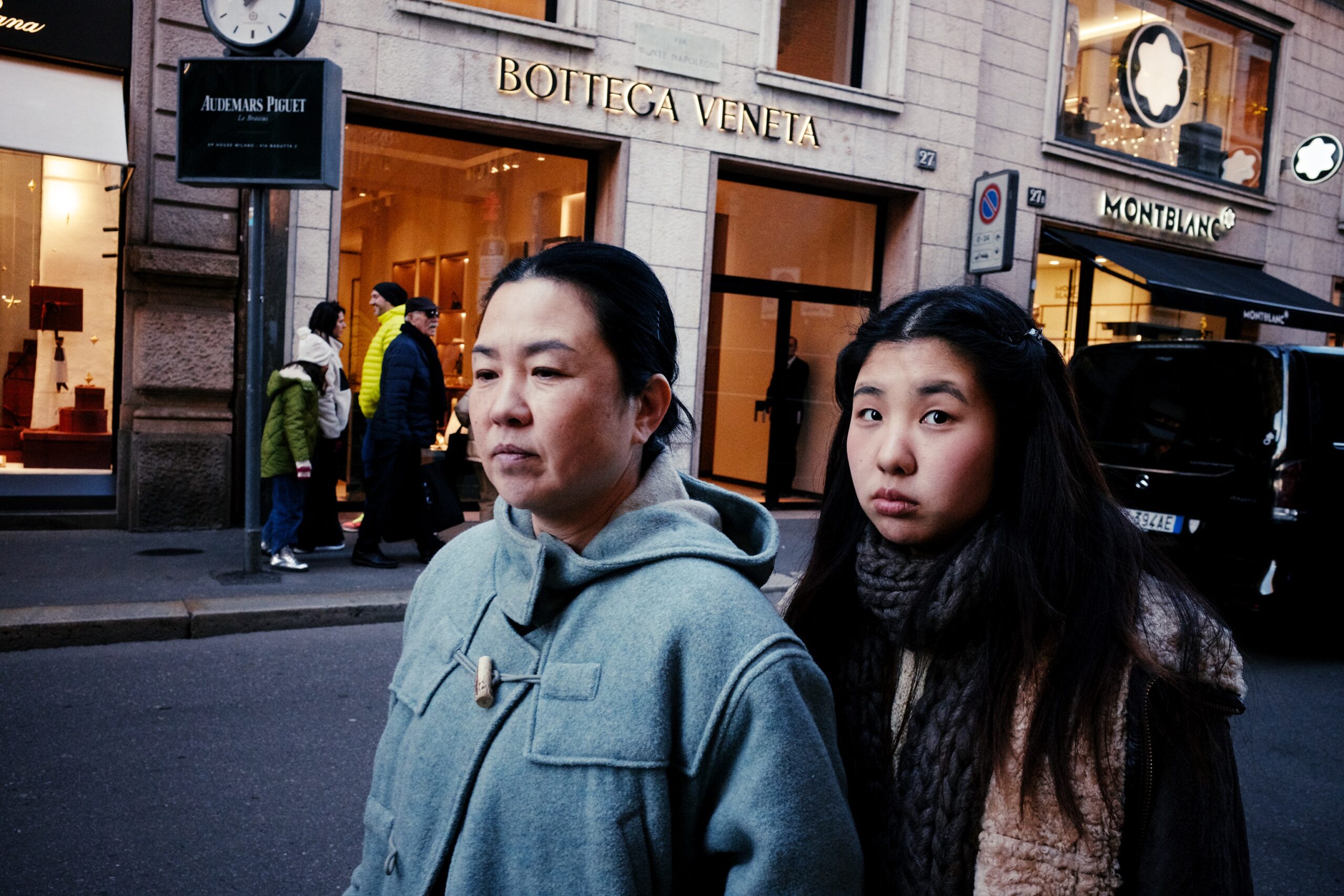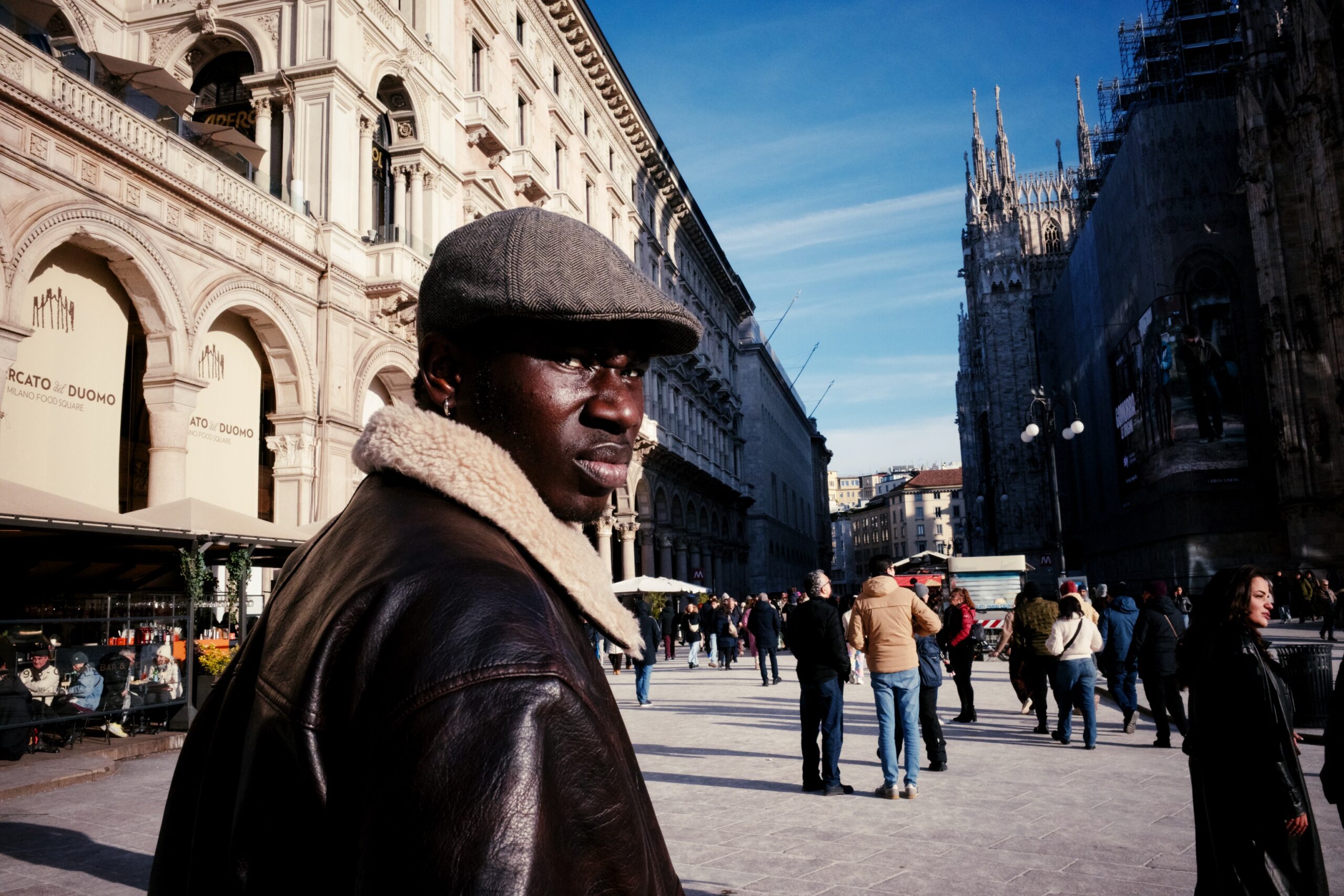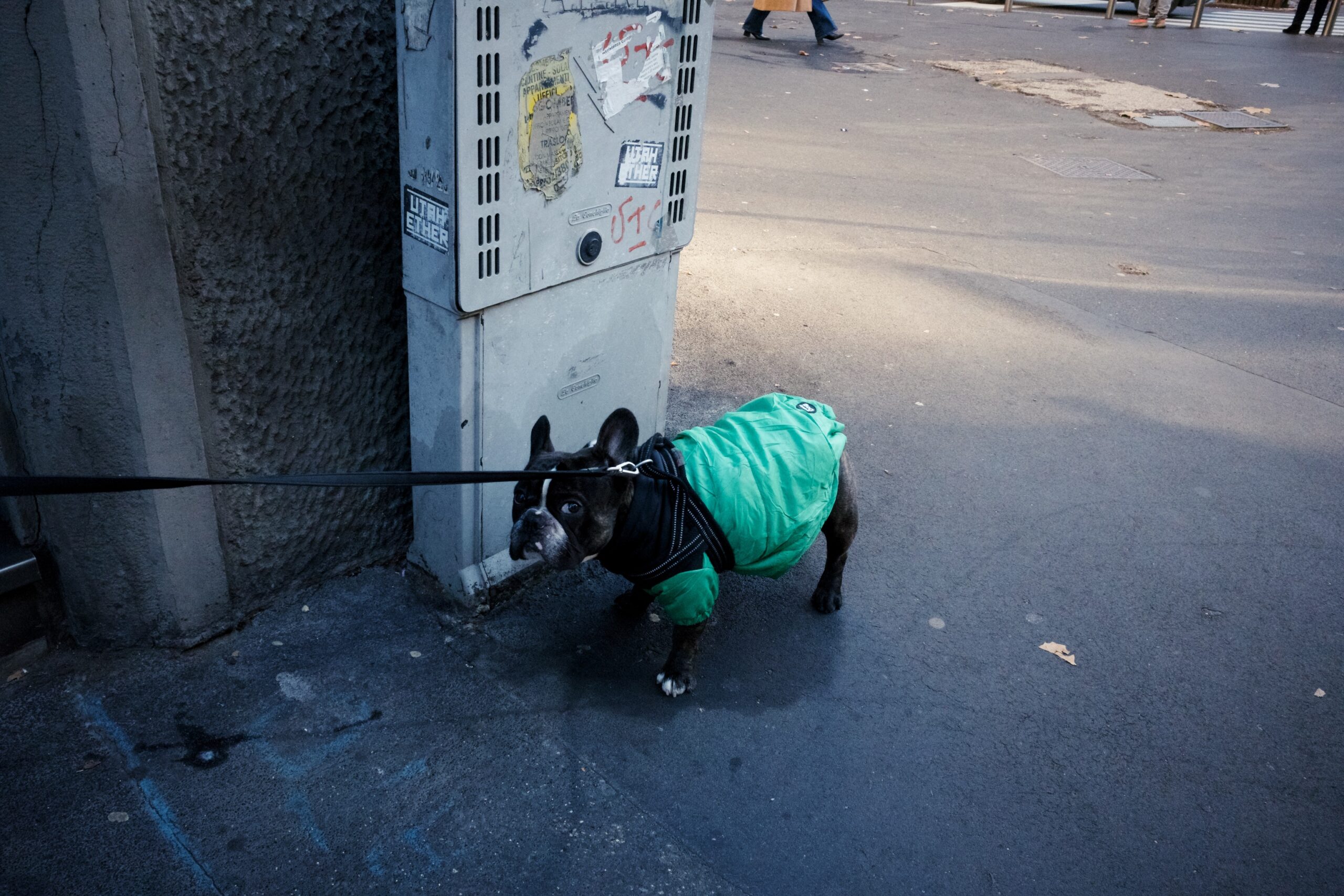
For the past few months, I’ve been shooting exclusively with the Ricoh GR IV and its 28mm equivalent focal length. Coming from years of 35mm work, I expected a subtle adjustment. What I got was a fundamental shift in how I approach every frame.
The math seems insignificant—just 7mm difference. But in practice, 28mm forces you at least two full steps closer to your subject compared to 35mm. And those two steps change everything.
The Distortion Problem
Wide-angle lenses don’t just show more of a scene—they actively distort spatial relationships. Subjects in the foreground appear larger and more imposing. Anything beyond a few meters shrinks dramatically. This isn’t a defect; it’s the optical reality of how wide-angle lenses work.
With 35mm, you can stay at a comfortable distance and your subject still maintains proper proportions in the frame. At 28mm, that same distance makes your subject look small and disconnected from the viewer. The environment overwhelms them.
You have two options: get significantly closer, or make the environment itself the subject.
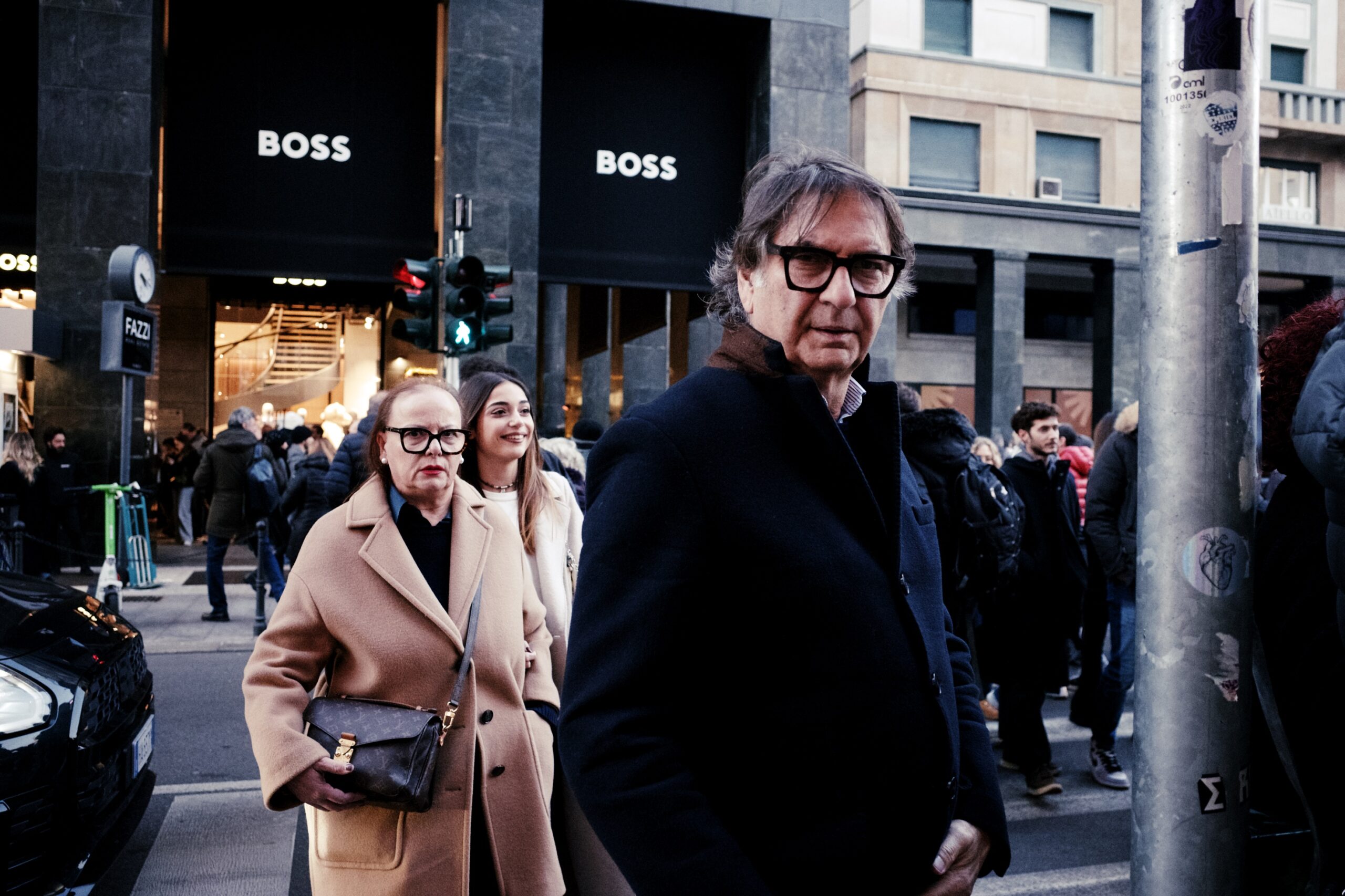
When Distance Fails
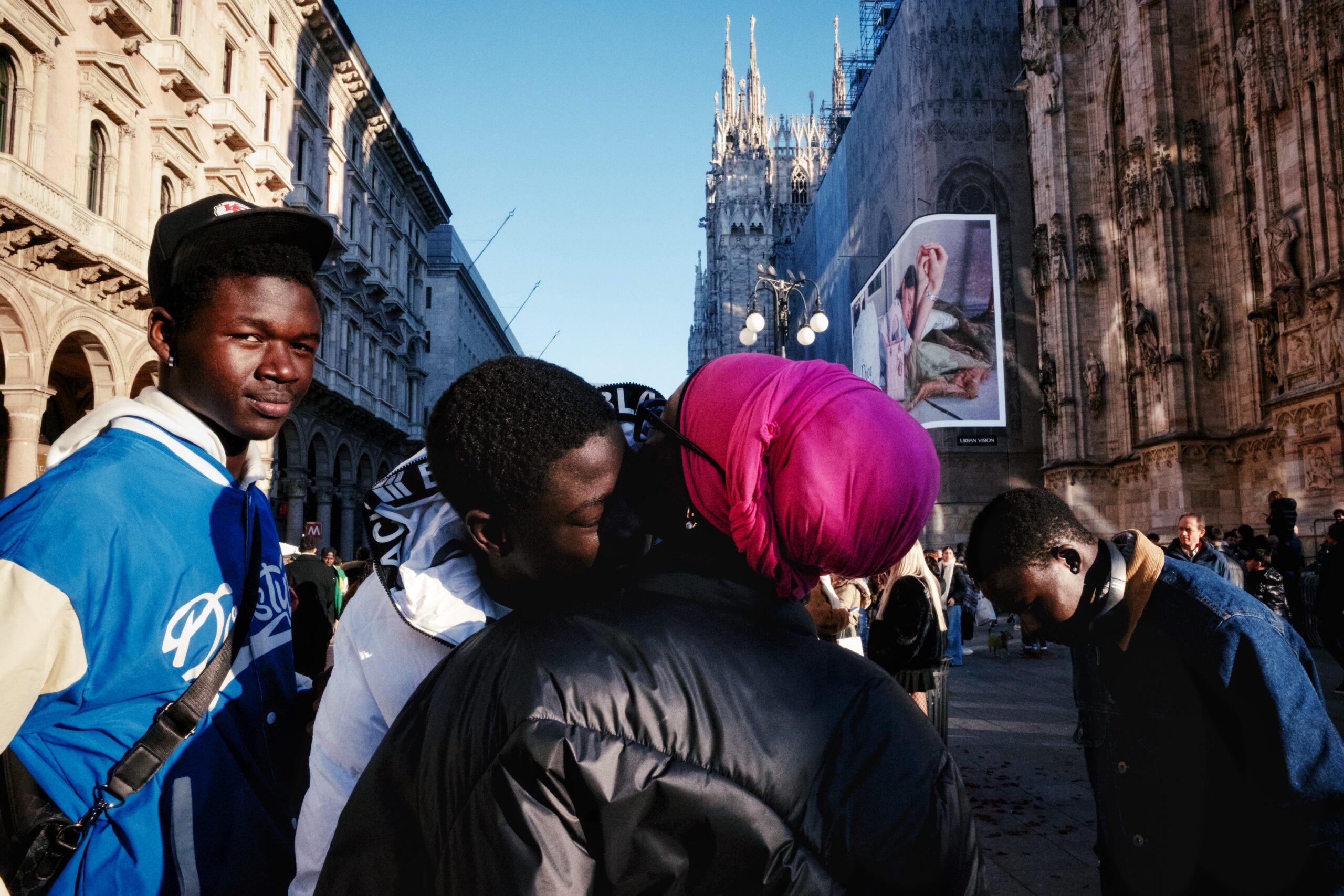
Look at this shot taken with 35mm. The woman on the far right completes the narrative—three separate moments in one frame. The 35mm focal length preserves her as a legible element despite the distance.
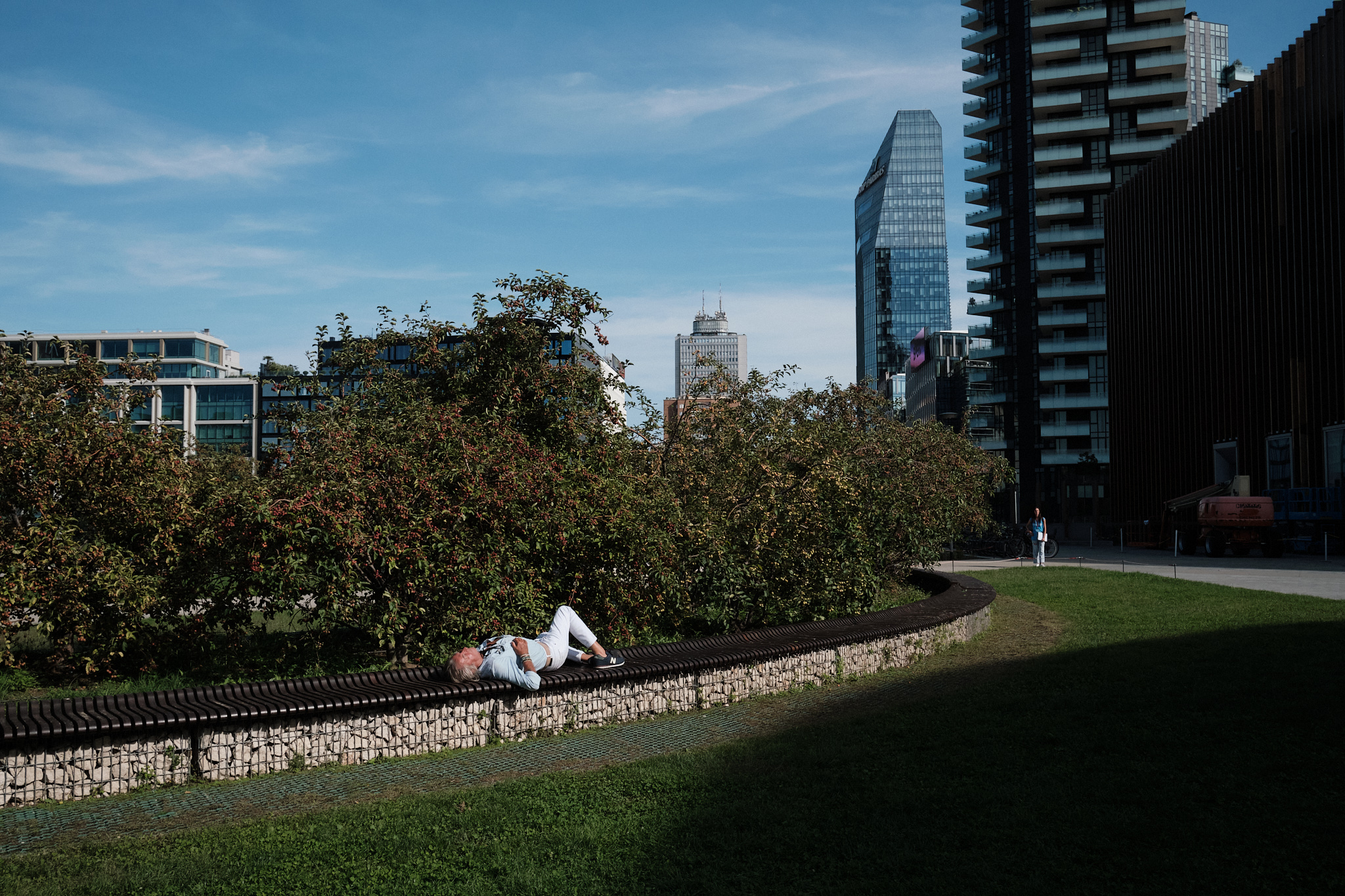
If I’d shot this at 28mm from the same position, she would’ve shrunk to near-insignificance. The distortion would’ve made her too small to register as part of the story. The 35mm forgives hesitation. The 28mm punishes it.
This is the core challenge: 28mm demands commitment. You can’t hedge your distance. Either step into the frame, or accept that distant elements will become environmental texture rather than subjects.
The Psychological Barrier
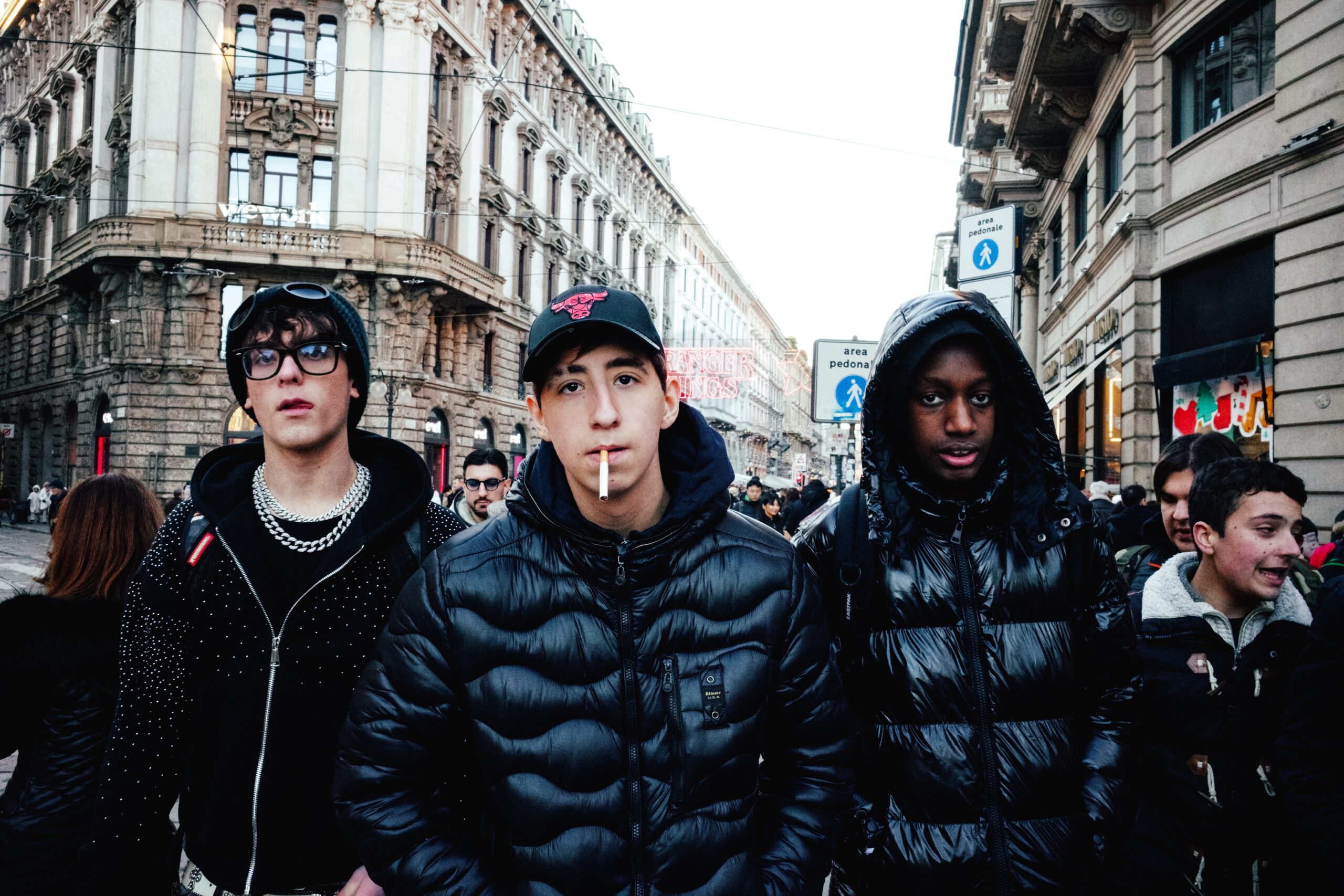
Getting close enough for 28mm means entering people’s personal space in a way that is more intrusive than 35mm requires. In crowded environments like Milan’s metro or the Duomo area, this becomes possible—people barely register each other’s proximity. But it still requires intent.
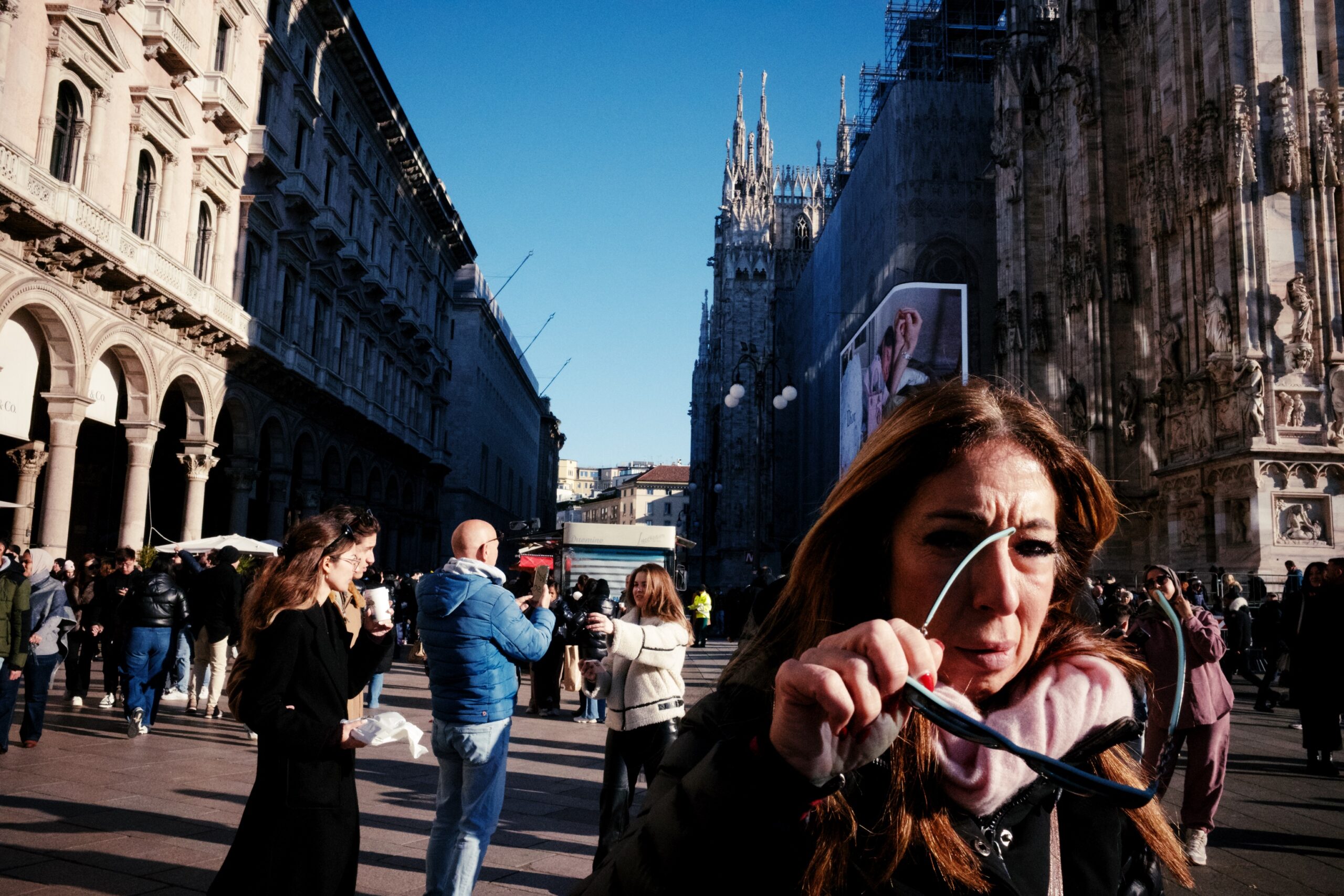
You can’t be passive with this focal length. You can’t hang back and wait for moments to unfold at a comfortable distance. The lens forces a more aggressive shooting style—not aggressive in attitude, but in physical positioning. You become part of the scene rather than an observer of it.
This creates interesting energy in the frame when it works. There’s an immediacy, a sense of presence that feels different from 35mm’s more neutral perspective. But “when it works” is the operative phrase. Miss your distance by even a step, and the shot collapses.
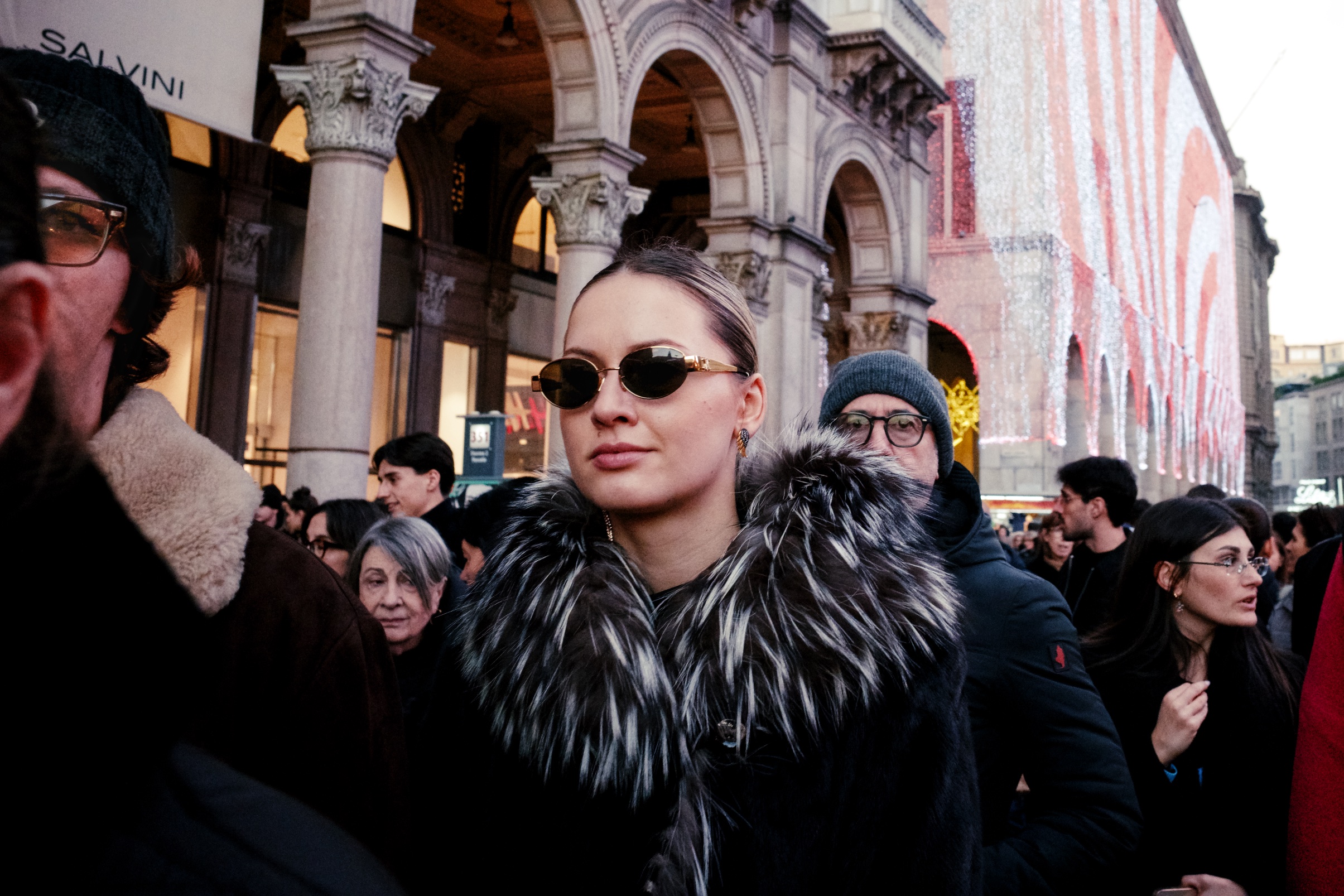
When 28mm Works
The focal length excels when you commit fully—when you step into the scene rather than photograph it from outside. The distortion that punishes hesitation becomes a strength when you embrace it.
It also excels in tight spaces where 35mm would be too narrow—narrow streets, crowded interiors, moments where you need context but can’t step back. In these situations, 28mm isn’t a compromise; it’s the right tool.
The Real Question
If someone asked me to choose only one focal length for the rest of my life, I’d probably say 35mm. It’s the sensible answer—the perfect middle ground between 50mm’s intimacy and true wide-angle’s spatial context. It’s forgiving. It’s versatile. It’s the right choice.
But photography isn’t about theoretical right choices. It’s about the camera you actually carry. The Ricoh GR IV lives in my pocket. It comes to the office, on evening walks, through the metro. A theoretically superior lens that stays home loses to the one that’s always with you.
So the 28mm stays—not because it’s the perfect focal length, but because it’s the one I have when the moment happens.